
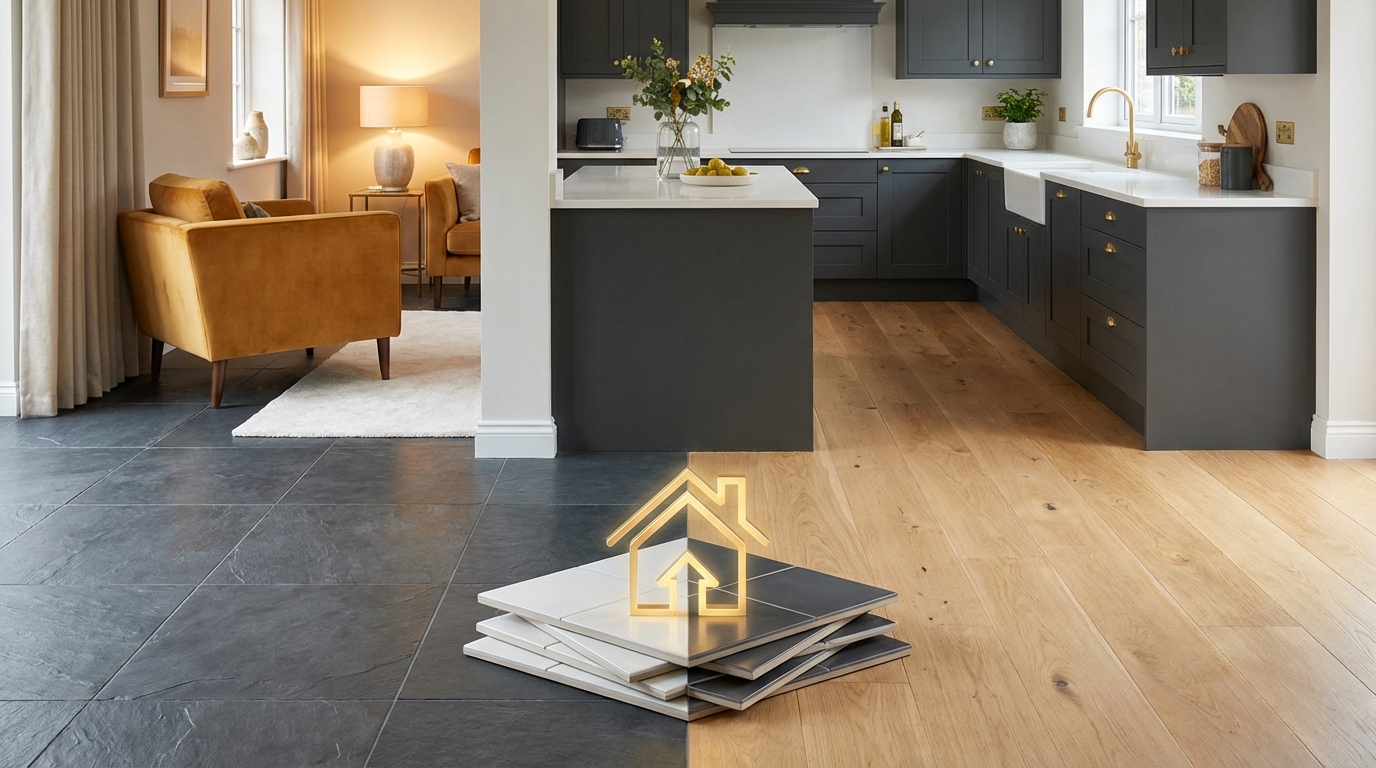
So, you are trying to figure out which flooring increases home value the most. The short answer is: high quality hardwood flooring gives the best return on investment in most markets, with luxury vinyl plank (LVP) a close second for budget and durability.
Buyers still pay a premium for real wood, and agents talk about it all the time in listings because it affects offers. At the same time, new materials like LVP and good tile can get you close to the same bump in perceived value if you choose them carefully and install them well.
Here are the key points before we break things down.
- Solid or high‑quality engineered hardwood usually brings the highest resale bump.
- Luxury vinyl plank (LVP) often delivers the best “dollar-for-dollar” ROI because it costs less to install.
- Quality matters more than the specific product line; cheap floors drag value down.
- Consistency from room to room raises perceived value and makes spaces feel larger.
- Bathrooms and laundry rooms reward tile or waterproof LVP more than wood.
- Carpet in main living areas tends to hurt resale; buyers see it as something to replace.
- Local climate and buyer expectations change the “best” choice; what works in Phoenix may not be smart in Boston.
- Professional installation and subfloor prep make or break ROI more than people expect.
Let’s walk through what actually affects resale value, real numbers on ROI, and how to pick flooring that pays you back instead of just looking nice on move‑in day.
How flooring really affects home value
When buyers walk through a house, flooring hits them in the first 3 seconds. They might not be able to name the brand or species, but they feel:
- Does this floor look clean and fresh?
- Does it feel solid underfoot?
- Will I have to replace it soon?
- Does it match the style of the home?
If the answers are negative, buyers start subtracting mentally. They think:
> “Ok, I like the house, but I’m going to need 15k to rip out this carpet and fix the floors.”
That 15k number does not always reflect real replacement cost. It is a mental tax on your sale price.
If the floors look great, something different happens:
> “We can move in and not touch anything. That is worth a lot.”
The actual appraised value of your home will not jump 20 percent because you put in new floors. But perceived value and “I want this house” emotion push offers up and days on market down.
ROI basics: what the numbers say
Different studies give different numbers, but trends are pretty consistent:
- Real estate agents often report that new hardwood can return 70 to 80 percent of its cost on resale in strong markets.
- Some surveys of homeowners show that buyers are willing to pay 2 to 3 percent more for homes with high quality wood floors.
- New flooring across most of the house almost always improves saleability, which is harder to measure but very real.
So if you spend 10,000 on solid or engineered hardwood in the main areas, you might get 7,000 to 8,000 back in direct value and the rest in faster offers and fewer concessions.
From a pure ROI lens, the winner is not always the product with the highest price. The winner is the product that:
- Matches buyer expectations in your price range and area.
- Looks expensive relative to what you paid.
- Holds up well enough that it still looks good at sale time.
That is why hardwood often wins the “value” contest, but LVP often wins the “ROI per dollar spent” contest.
Side‑by‑side: which flooring really boosts resale the most?
Here is a simple comparison of common flooring types for resale. These are general ranges, not promises. Local markets can change exact numbers.
| Flooring type | Typical installed cost per sq ft (US) | Buyer appeal for resale | Estimated ROI range | Best locations in house |
|---|---|---|---|---|
| Solid hardwood | $8 – $15+ | Very high | 70% – 80% | Living, dining, halls, bedrooms (not wet areas) |
| Engineered hardwood (quality) | $6 – $12 | Very high | 65% – 80% | Main floors, some basements (if dry) |
| Luxury vinyl plank (LVP) | $3 – $7 | High | 70% – 100% (on a budget remodel) | Whole house, including kitchens & some baths |
| Quality porcelain/ceramic tile | $5 – $12 | High in warm or high‑end markets | 60% – 75% | Baths, kitchens, entries, warm‑climate homes |
| Laminate (modern, mid‑range) | $2.50 – $6 | Medium | 50% – 70% | Living areas where budget is tight |
| Carpet (builder‑grade) | $2 – $4 | Low | 20% – 40% | Secondary bedrooms, basements only |
| High‑end carpet (primary bedroom) | $4 – $8 | Medium to high (room‑specific) | 50% – 70% | Owner suite only |
Now let us dig into each type with a resale lens only. Not just beauty. Not just comfort. Pure “what do buyers think” and “how does that affect your bottom line.”
Hardwood: still the resale king in most markets
Hardwood floors have a brand in buyers’ minds. The words “hardwood throughout” in a listing change behavior. People save that listing, they schedule a viewing sooner, and they walk in with higher expectations.
Real or perceived, that reaction has real money behind it.
Why hardwood delivers strong ROI
- Buyers see hardwood as long lasting and repairable, not disposable.
- It fits many styles: traditional, modern, farmhouse, etc.
- You can refinish it to a different stain every decade, so it ages well.
- Agents like to call it out in marketing, which helps your listing stand out.
I have heard buyers say something like:
> “We can live with the older kitchen, but the hardwood is beautiful. We will update the kitchen in a few years.”
In other words, good wood floors can compensate for other parts of the house that are not perfect.
Solid vs engineered hardwood for value
Both solid and quality engineered wood score high with buyers, but they are not equal in every sense.
- Solid hardwood (3/4 inch thick) can be sanded many times. It signals permanence. In older homes and high price points, this is still the gold standard.
- Engineered hardwood has a real wood surface with a plywood or similar core. Thicker wear layers (3mm or more) can be refinished a couple of times and look just like solid to most buyers.
From a pure ROI perspective:
- If your home is mid to high price range and you are in a wood‑friendly climate, quality engineered often hits the sweet spot of cost vs perceived luxury.
- In high‑end or historic areas, solid hardwood can still pay off because buyers expect it and compare you with other homes that have it.
Where hardwood makes sense
You get the best value boost when you use hardwood in:
- Living rooms and family rooms
- Dining areas
- Main hallways
- Bedrooms (outside of high humidity basements)
Kitchens are more mixed. Some buyers love hardwood in kitchens. Others worry about water. For resale, hardwood in the kitchen works well if:
- You have good mats and protection around sinks and dishwashers during your ownership.
- You keep it well maintained and catch spills early.
In full bathrooms and laundry rooms, hardwood is usually a risk for ROI. Moisture damage can wipe out the benefits by the time you sell.
How to choose hardwood that helps, not hurts, value
A few rules can keep you out of trouble:
- Stick to neutral stains: light natural, natural oak, or medium browns. Extreme dark or gray tones date faster.
- Avoid very narrow strips in new installs; 4 to 6 inch planks feel current and upscale in many markets.
- Match or blend with existing wood if you have older floors nearby. Harsh transitions drop perceived quality.
- Invest in a professional finish system; cheap finishes scratch and dull, which kills the effect at sale time.
> Buyers often say they want “move‑in ready,” but what they really react to is “this looks clean and taken care of.”
Good hardwood does that job the moment they walk in.
Luxury vinyl plank (LVP): ROI workhorse for many homes
LVP has changed the flooring conversation during the last decade. Old vinyl had a bad name. Newer luxury planks look and feel much better, and buyers have started to accept them as a smart, low maintenance choice.
For many mid‑price homes, LVP is the real ROI sweet spot.
Why LVP hits above its price
- Material and install costs are lower than wood and tile, especially floating click systems.
- Water resistance means fewer “floor is ruined” moments from spills or kids.
- It gives you the “continuous floor” look across living, kitchen, and hallways without worrying as much about moisture transitions.
- Good LVP mimics higher end wood visually from a distance, and many buyers accept that tradeoff.
In realtor feedback, you often hear something like:
> “Buyers liked that the floors were new, matched throughout, and low maintenance. They did not mind that it was LVP instead of real wood at this price point.”
So while LVP may not bring the same premium as real hardwood in a luxury listing, it can produce excellent ROI in starter and mid‑level homes because you spend far less to achieve a fresh, cohesive look.
What kind of LVP is best for resale
Not all LVP looks equal once installed. For value:
- Choose planks with realistic grain patterns and a low to medium sheen. High gloss looks fake quickly.
- A wear layer of 12 mil or more helps it stay presentable; 20 mil and up is better in busy houses.
- Stick with neutral, natural wood tones, not extreme grays or super trendy colors.
- Avoid the cheapest lines that sound hollow or flex underfoot; buyers feel that immediately.
If the floor feels solid, looks consistent from room to room, and has decent sound underfoot, buyers often check the “flooring” box off in their minds and move on to other parts of your home.
Where LVP makes the most difference
LVP shines when you use it to replace:
- Old carpet in living areas and halls
- Old sheet vinyl in kitchens
- Mismatched surfaces that break up your main floor
Fully replacing a patchwork of tile, carpet, and vinyl with a single LVP product from entry to kitchen to living room can visually “grow” your home. Buyers feel that openness. That feeling helps offers.
In basements and lower levels that can get damp, LVP often beats laminate or wood for peace of mind during inspections.
Tile: high payoff in the right rooms and climates
Ceramic and porcelain tile still rank high in buyer expectations, especially in warm climates and upper tier homes.
They are not always the best ROI in every room, because install costs can climb fast. But for baths and entries, well chosen tile sends a strong “this house will last” signal.
Where tile pays off most
- Full bathrooms: Floors and shower surrounds are almost always tile or similar. Cheap, dated tile drags value down. Fresh, modern tile lifts the space more than almost any other bathroom material change.
- Primary shower: Buyers look here. Period. A clean, current tile shower can sway their decision.
- Entryways and mudrooms: Tile helps these heavy traffic areas feel sturdy and low maintenance.
In hotter regions, sellers sometimes run tile throughout living areas. There, buyers often see it as an upgrade over carpet or old vinyl. In colder regions, full‑house tile can feel cold and works better at higher price points with radiant heat.
How tile choices affect value
With tile, details matter:
- Larger formats (e.g., 12×24 or 24×24) feel more current than small builder squares in many markets.
- Neutral, soft patterns age better than busy prints.
- Grout color and width affect perceived quality. Thin grout lines in a matching tone look higher end.
- Cheap or uneven installation makes even expensive tile look bad.
> In buyer feedback, tile is rarely the main reason they buy a home, but poor tile is often a reason they lower their offer.
So tile tends to be a defensive play. It protects value. It prevents a drop in offers caused by moldy grout, cracked squares, or odd colors from a past decade.
Laminate: middle of the pack for resale
Modern laminate flooring is much better than the early generations that swelled at the first hint of water. Still, many buyers have that old image in their minds.
So laminate can be a reasonable choice when budget is tight, but you have to be realistic: it will not bring the same resale lift as hardwood or good LVP in most markets.
When laminate can still be a smart move
- You are updating a rental or starter home and need a hard surface to replace tired carpet.
- You want a better look today and plan to sell within a few years, but cannot justify hardwood costs.
- Your local buyers are already used to seeing quality laminate in similar homes.
From a buyer’s view:
> “Ok, it is laminate, but it looks clean and new. It is better than the old carpet we saw in the last place.”
That reaction is fine for ROI. Not amazing, but not harmful.
What hurts laminate value
- Exposed swelling at seams near doors or sinks.
- Obvious repeats in the pattern that scream “fake.”
- Loud, hollow sound that feels cheap when walked on.
If you do use laminate, focus on:
- High water resistance where possible.
- Better underlayment for sound control.
- Clean transitions at doorways so buyers see a unified job, not a DIY patchwork.
Carpet: when it helps and when it hurts
Carpet is tricky for value. Buyers associate it with allergens, stains, and “work to replace.” Yet in some spaces, they still like it.
Where carpet can make sense
- Secondary bedrooms for kids
- Basements or bonus rooms where warmth underfoot matters
- Primary bedrooms, if the carpet is high quality and feels plush
Fresh, neutral carpet in bedrooms can be a net positive for buyers who enjoy softer floors for bare feet and quieter acoustics.
But the key word is “fresh.” Old carpet is one of the fastest ways to drop offers.
> When buyers smell “old carpet” or see traffic patterns, they mentally remove thousands from what they are willing to pay.
When carpet kills resale value
- Carpet in dining rooms and active living spaces.
- Carpet in bathrooms, which signals outdated and unhygienic conditions.
- Heavy stains, odors, or visible wear.
- Strong colors or patterns tied to a very specific taste.
If you are preparing to sell and budget is limited, replacing the worst carpet with a neutral, mid‑grade product is often money well spent. But for new projects, try to keep main living areas on hard surfaces for long term value.
Which flooring gives the best ROI by room
Sometimes the best value does not mean one material throughout. It means the right material in each zone, with as much consistency as possible.
Here is a room‑by‑room approach that balances buyer expectations with cost.
Main living areas and hallways
These areas set your home’s first impression. Strong choices:
- Best for value: Solid hardwood or quality engineered hardwood, in a neutral tone.
- Best budget ROI: Good LVP installed wall to wall, replacing old carpet and vinyl.
Try to avoid:
- Multiple floor types chopping up each space.
- Old laminate with visible wear.
Kitchens
Kitchens get a lot of abuse, and buyers look here closely.
- Strong choices for value:
- Engineered hardwood continued from the living area, if your climate and household habits are gentle on water.
- Quality LVP that looks like wood, giving you a continuous look with more moisture tolerance.
- Porcelain tile in higher end or warm‑weather homes.
Watch out for:
- Cheap sheet vinyl; it is one of the fastest visual signals of a dated kitchen.
- Harsh transitions, like a small rectangle of tile dropped into a hardwood field.
Bedrooms
For bedrooms, comfort enters the picture more.
- Value focused paths:
- Hardwood or LVP throughout, with area rugs for softness.
- Neutral, mid‑grade carpet in secondary bedrooms, set apart from hard surfaces in the main areas.
In primary bedrooms, good wood plus a large rug often sends a nicer signal than wall‑to‑wall carpet.
Bathrooms
In full baths:
- Best for value: Porcelain or ceramic tile on floors and shower areas.
- Budget but decent: Waterproof LVP on the floor, with tile in the shower / tub surround.
Buyers rarely reward wood or laminate in full baths. They worry about long term water damage, and inspectors do too.
Powder rooms can tolerate more choices, but tile or LVP still appeal to more buyers.
Basements
Basements are all about moisture control and comfort.
- Good value choices:
- LVP with a moisture barrier underlayment.
- Quality carpet over a proper pad, if moisture is controlled.
Solid hardwood in basements with any hint of moisture can backfire if cupping or warping happens before you sell.
Market and climate: why “best flooring” is not the same everywhere
You can pick the perfect product on paper and still miss ROI in real life if it does not match buyer expectations where you live.
Climate impact
- Humid areas: Solid hardwood is more prone to movement. Engineered wood or LVP can be a safer bet.
- Very dry or high temp areas: Tile and LVP often feel right and appeal to more buyers.
- Cold climates: Full‑house tile without radiant heat can feel uncomfortable for many buyers.
Local buyer expectations
What your neighbors are doing matters. If every comparable home listed nearby features “hardwood on main level,” then installing laminate in your remodel will probably not give the best resale bump.
If the norm in your price bracket is LVP and tile, spending huge on hardwood may not return as much as you hope. You raise your home above the pack, but buyers may not pay the full premium.
> The best ROI often comes from meeting or slightly surpassing local norms, not from going far above them.
One practical move is to look at recent sale listings in your area:
- Check photos and read descriptions of homes that sold quickly at strong prices.
- List what types of flooring they had in main spaces vs baths vs bedrooms.
- Use that pattern as your baseline.
If you are unsure, a quick conversation with two or three local agents who actively sell in your neighborhood can ground your decision.
Installation quality: the hidden ROI factor
Many homeowners obsess over brand names and color swatches while treating installation like a commodity. From a buyer standpoint, the reverse is often true.
A mid‑range product installed well can look far better than a premium product installed poorly.
What buyers notice about installation
Buyers might not know terminology, but they see:
- Uneven transitions between rooms
- Gaps at the baseboards or around vents
- Boards that do not line up visually
- Squeaks, soft spots, or hollow sounds
- Tile lippage, where edges are not flat
These small defects send a message:
> “If they cut corners on something visible like flooring, what did they do where I cannot see?”
That doubt lowers trust, and when trust falls, offers often follow.
Why subfloor prep matters for ROI
Good installation starts under the floor. Leveling compounds, moisture barriers, and repairs to the existing subfloor do not show up in listing photos, but they affect how the floor feels years later.
If you invest in better prep today, you:
- Reduce the odds of squeaks and movement that annoy buyers.
- Reduce risk of moisture damage, which shows up in inspections.
- Help your floor age better so it still looks strong at resale time.
For ROI, it usually makes more sense to:
- Pick a slightly cheaper product tier, and
- Pay for a better installer and proper prep
than the opposite.
How long before selling: timing your flooring choice
Your timeline to sale changes which flooring gives the best ROI for you personally.
If you plan to sell within 1-3 years
Your floors should look almost new at listing time. Durability over decades matters less than:
- Instant visual impact
- Neutral, broadly appealing style
- Cost control
Strong strategies:
- LVP for main floors in mid‑range homes, plus tile refreshes in key baths.
- Refinishing existing hardwood if it has good bones instead of full replacement.
- Replacing only the worst carpet with neutral new carpet in bedrooms.
If you plan to hold for 5-10+ years
Now you care more about how the floors will age for you and for future buyers.
Upgrading to hardwood or thick‑wear engineered wood makes more sense, because:
- You get daily enjoyment as a homeowner.
- You have time to justify the higher initial cost.
- You can refinish or refresh the surface once before selling if needed.
In wet areas, strong tile is a safer long game than pushing hardwood beyond its comfort zone.
Budget levels: best flooring ROI at different spend ranges
Let us break it down by three rough budget tiers for a typical 1,000 sq ft of main floor space, just as a working example. Numbers are ballpark and include labor.
Lower budget: $3,000 to $6,000
Goals:
- Replace tired flooring that drags the house down.
- Create a consistent look across visible areas.
Smart moves:
- Install a good mid‑range LVP throughout main living, hall, and kitchen.
- Patch or clean tile in baths; only replace if it is in very poor shape.
- Replace worst carpet in key bedrooms; deep clean the rest.
Here, LVP often gives you the best ROI because you can do more square footage for the money.
Mid budget: $6,000 to $12,000
Goals:
- Compete strongly with other listings in your price band.
- Harden your home against buyer objections about “old” finishes.
Smart moves:
- Engineered hardwood or high‑quality LVP throughout the main level.
- Tile refresh in at least one key bathroom if current tile is dated.
- Replace carpet in all bedrooms so no room smells or looks worn.
You can also consider refinishing existing hardwood and spending more on tile and bath updates. Refinished hardwood often feels new to buyers.
Higher budget: $12,000 and up
Goals:
- Lift the perceived tier of your home within its neighborhood.
- Create a strong first impression and notable listing photos.
Smart moves:
- Solid or thick‑wear engineered hardwood on all main floors and stairs.
- Porcelain tile in all full baths and laundry room.
- High quality carpet only in primary bedroom and possibly a media room.
At this level, hardwood almost always gives better value signals than laminate or basic LVP, especially in areas where buyers are already expecting it.
Common flooring mistakes that hurt ROI
Sometimes the fastest way to protect value is just to avoid known traps.
Mistake 1: Too many flooring types
A home with 5 or 6 different materials on one level feels chopped up. Buyers struggle to see it as one continuous space.
Try to:
- Use one main hard surface across living, dining, hall, and kitchen.
- Change surface only when it makes functional sense: baths, entries, laundry.
Mistake 2: Trendy colors that age fast
Strong grays, heavy distressing, or unusual stains can look great on social media today but feel dated fast.
For sale value, stick to:
- Natural woods, light to medium tans, soft browns.
- Subtle patterns in tile, not loud prints.
You can always bring trends into rugs, furniture, or wall paint. Those are easier for buyers to change.
Mistake 3: Cheap product in a high‑end home
Putting basic laminate in a luxury home or neighborhood sends the wrong signal. Buyers in that bracket expect the flooring to match the price.
If you cannot afford to do the whole high‑end home in hardwood or high‑grade materials, it can be smarter to:
- Focus on key areas (entry, living, kitchen)
- Leave some less visible areas as‑is or update them later
than to “value engineer” the entire house down.
Mistake 4: Ignoring transitions and trim
New floors with old, beat‑up baseboards or cheap, mismatched transition strips do not feel finished.
For better value:
- Refresh or repaint baseboards when you replace floors.
- Use clean, low‑profile transitions that match or complement the flooring.
These touches make the whole job feel more intentional and complete.
So which flooring increases home value the most?
If we pull it all together and keep ROI in focus:
- Top resale driver: High quality hardwood (solid or engineered) in main living areas, especially in markets where buyers expect it.
- Top budget ROI pick: Good luxury vinyl plank across main living spaces, with neutral style and solid installation.
- Key support player: Porcelain tile in bathrooms and entries to protect value and avoid negative reactions.
- Limited use: Carpet in bedrooms and basements, fresh and neutral only.
> Hardwood tends to raise ceiling value. LVP tends to raise floor value (no pun intended) by eliminating buyer objections at a lower cost.
If you are torn between them, look at your specific home:
- Price point and neighborhood norms
- Climate and moisture risks
- How long you plan to live there
Then pick the option that:
- Matches what buyers already like in your area
- You can afford to do well, with proper prep and installation
- You personally enjoy walking on every day until sale time
A practical final step: before you commit, print or pull up 5 recent listings that sold fast in your area. Compare their floors to your plan. If your plan matches or slightly improves on what got those homes sold, you are on the right track.